
The Pricing Problem Most Businesses Don’t Notice Early Enough
The business is growing. Revenue is up. Customers aren’t pushing back on price.
So why does scaling feel harder than it should?
More often than not, the answer is sitting in the pricing model, and nobody’s looking there.
In most companies, it follows a familiar path. Costs are calculated, a margin is added, and the final number feels reasonable enough to take to market. Over time, this becomes the default pricing strategy for the business.
And to be fair, it works in the beginning.
But as the business grows, the cracks start showing in less obvious ways. Revenue may continue to rise, but profitability doesn’t keep pace. Better products don’t translate into stronger pricing power. Teams work harder to close deals that should have been easier.
That’s usually the first signal.
The issue isn’t demand. It isn’t an effort.
It’s how the business is thinking about pricing in the first place.
And more often than not, it comes back to an overdependence on cost-plus pricing.
Why Cost-Plus Pricing Feels Logical but Starts Limiting You

There’s comfort in cost-plus pricing. It gives a sense of structure.
You know what something costs. You decide what margin makes sense. The math is clean, and the decision feels grounded. For internal teams, it removes ambiguity.
But markets don’t operate on your internal math.
Customers aren’t evaluating your cost sheets. They’re looking at outcomes. They’re comparing alternatives. They’re asking a much simpler question: what do I get, and is it worth it?
That’s where things begin to diverge.
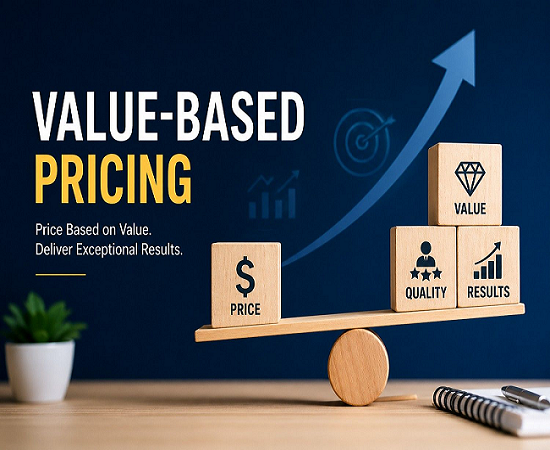
The conversation around value-based pricing vs cost-plus pricing is often framed as a technical shift. In reality, it’s a change in perspective. One approach looks inward. The other looks outward.
Over time, businesses that remain anchored to cost structures often fail to recognise how much their value has actually increased. They keep pricing conservatively, even when the market would accept more.
And that gap rarely shows up immediately. It builds quietly.
What Changes When Pricing Starts Reflecting Value
A value-based pricing strategy doesn’t begin with numbers. It begins with understanding.
It forces a different kind of thinking. What is the real problem being solved here? How important is it to the customer? What happens if this solution works well? What happens if it doesn’t exist?
When those questions are taken seriously, pricing starts to shift naturally.
It’s no longer about covering costs. It’s about capturing value.
That change starts influencing everything around it. Sales conversations feel different. Instead of explaining price, teams start explaining outcomes. Customers engage differently because they understand what they’re buying into.
Even internally, decisions become sharper. Product improvements align more closely with what actually matters in the market.
Over time, value-based pricing stops feeling like a pricing method. It becomes part of how the business sees itself.
Why Businesses Hesitate Even When the Case Is Clear

Most leadership teams understand, at least conceptually, that value-based pricing makes sense.
Yet the shift rarely happens quickly. There’s hesitation. And it’s not without reason.
What if customers push back?
What if sales teams struggle to justify the change?
What if it disrupts relationships that took years to build?
These questions tend to slow things down.
But here’s what the hesitation usually reveals: the issue isn’t the price. It’s a positioning gap.
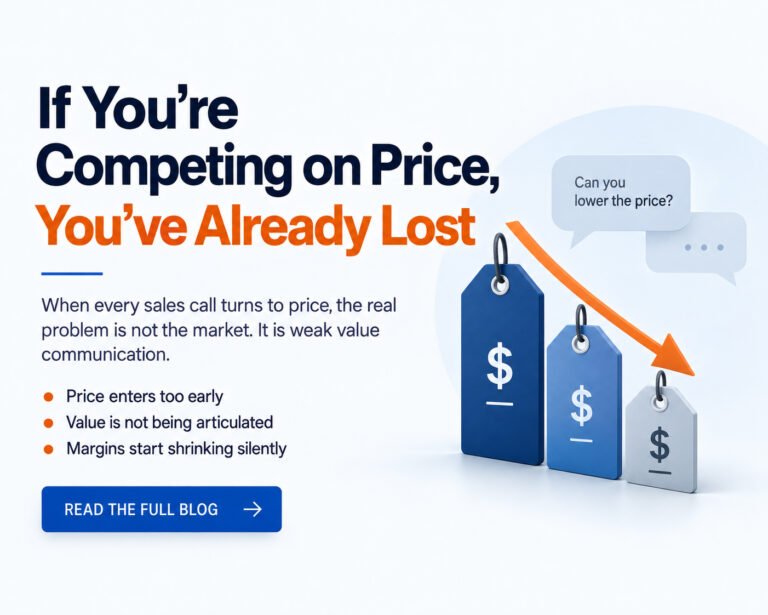
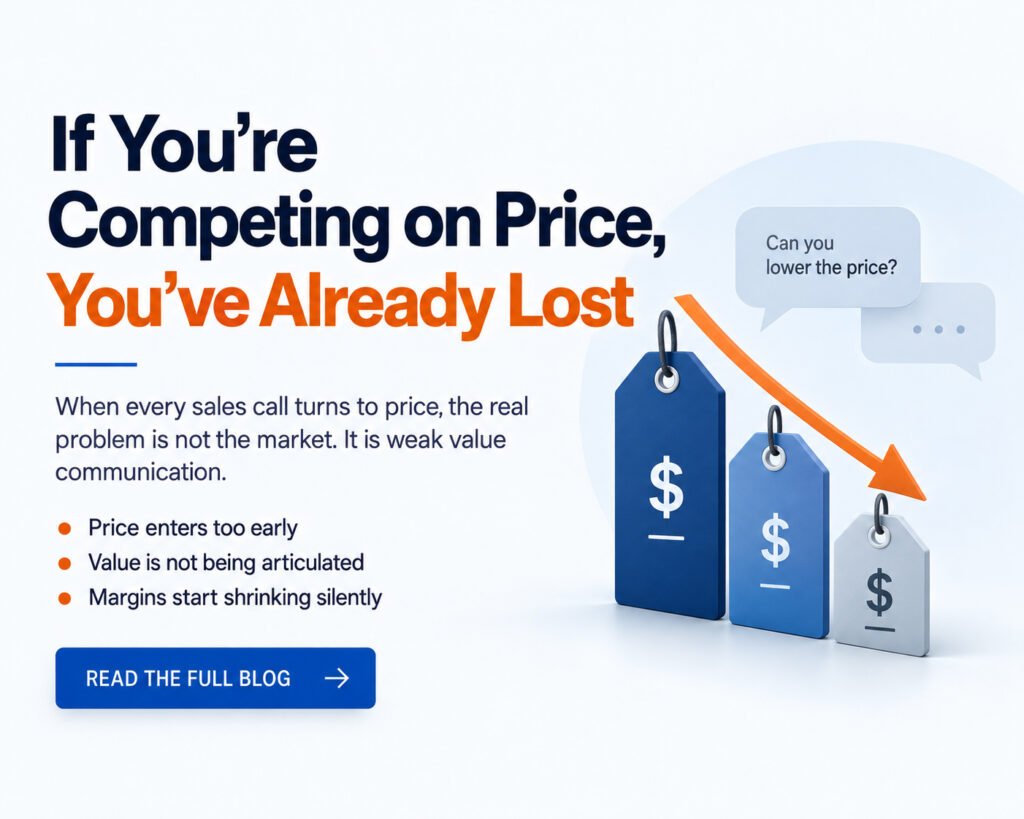
When customers push back on price, the actual reason is that the value hasn’t been made clear enough, not because the price is wrong.
A well-positioned offer at a higher price is easier to sell than a poorly-positioned offer at a lower price.
Customers are already making value-based decisions. They’re comparing options, weighing benefits, and deciding what makes sense for them.
When pricing doesn’t reflect that value clearly, it doesn’t make the product easier to sell. It just makes the positioning weaker.
That’s where the real issue lies. Not in the price itself, but in how confidently it can be explained and defended.
What Actually Improves When Pricing Aligns with Value
The benefits of value-based pricing are usually discussed in terms of margins. That’s part of it, but it’s not the whole story.
When pricing aligns with value, the nature of the business starts to change.
Customers who see clear value don’t negotiate the same way. They’re less focused on shaving off percentages and more focused on outcomes. Sales cycles become more direct because conversations are clearer.
Internally, there’s less pressure to discount. Teams don’t feel the need to “adjust” prices just to close deals. That alone can change how revenue behaves over time.
There’s also a shift in how the brand is perceived. A strong competitive pricing strategy isn’t about being cheaper. It’s about being understood well enough that price becomes secondary.
That clarity is what creates room to grow margins without constant friction.
Where the Real Difference Between the Two Approaches Shows Up
On the surface, the difference between value-based pricing and cost-plus pricing seems like a matter of calculation.
But the real difference is deeper.
A business using cost-plus pricing is working within its own constraints. It defines price based on what it needs to cover and protect.
A business using a value-based pricing strategy defines price based on what the market is willing to recognise.
One approach keeps adjusting to stay relevant. The other starts shaping its own position.
As competition increases, this gap becomes harder to ignore.
Companies focused on cost tend to react. They tweak pricing, respond to competitors, and protect margins where they can.
Companies focused on value behave differently. They create space. They don’t just compete within the market; they define how they’re seen in it.
That’s where pricing begins to influence growth instead of just supporting it.
Where Businesses Quietly Lose More Than They Think

When people talk about missed revenue, they usually think about lost deals or operational inefficiencies.
But one of the biggest losses is far less visible, and that is UNDERPRICING.
When a business consistently delivers strong outcomes but continues to price conservatively, it leaves value unclaimed. Not once, but repeatedly.
It doesn’t feel like a loss in the moment. Deals still close. Numbers still move.
But over time, it adds up. Margins stay tighter than they should be. Growth requires more effort. Scaling feels heavier than expected.
This is the real cost of staying too close to cost-plus pricing.
Not just lower pricing, but lower leverage.
Rebuilding Pricing as a Core Growth Lever
A strong pricing strategy for a business cannot sit in isolation.
It’s tied to how well the business understands its customers, how clearly it positions itself, and how effectively it communicates value in the market.
That’s why simply increasing prices rarely works. Without the right foundation, it feels forced.
But when the value is clear, pricing doesn’t need to be forced. It starts making sense on its own.
That’s when the benefits of value-based pricing begin to show up consistently. Not as a one-time improvement, but as something that strengthens the business over time.
The MIH Perspective
At Make 10X Happen, pricing is rarely looked at as a standalone decision.
The businesses that move away from cost-plus pricing fastest are usually the ones that stop asking “what should we charge?” and start asking “what do our customers believe we’re worth?”
That shift in question changes everything that follows.
Pricing is rarely just a number. It is a reflection of how clearly a business understands its own value, and how well its product, sales, and positioning are working together to communicate it.
Once pricing starts reflecting value, the rest of the system tends to align more naturally. Revenue improves in quality. Margins become more stable. Growth feels more controlled.
A Question Worth Asking
If customers continue to choose your business, stay longer, and trust what you deliver,
Are you still pricing based on internal cost assumptions… or on the real value they are already experiencing?