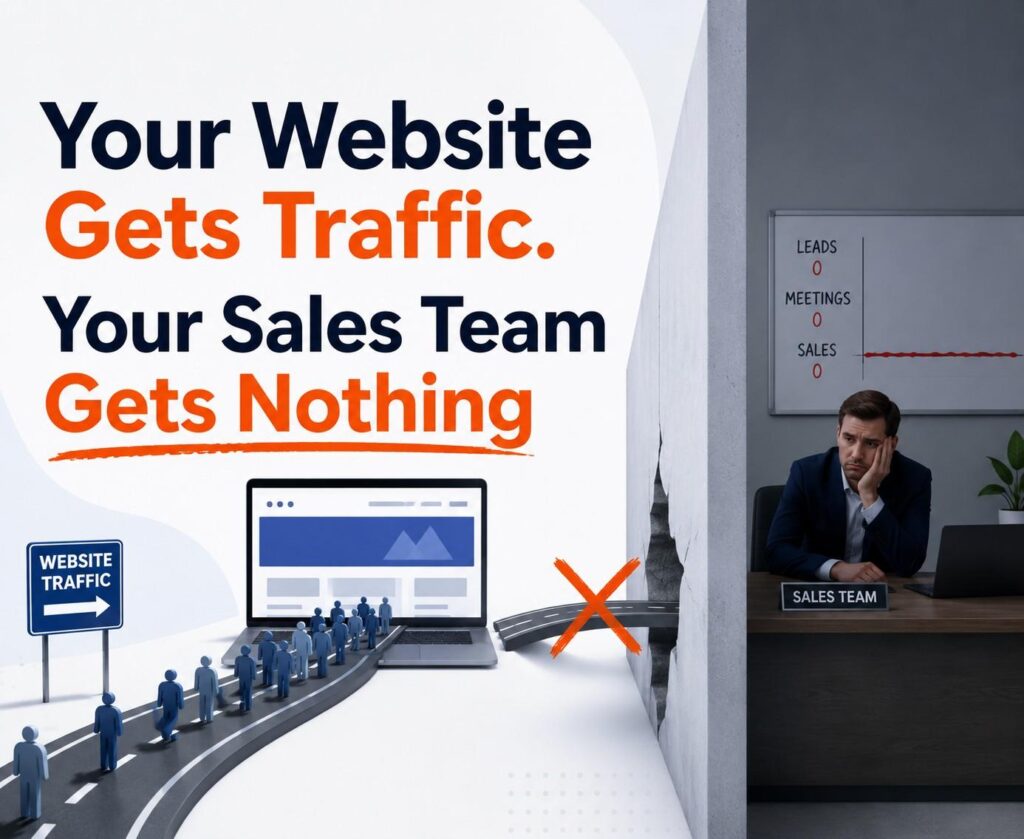

The Numbers Look Good Until Someone Asks About Revenue
The marketing dashboard looked impressive.
Traffic was growing month after month. Paid campaigns were consistently bringing visitors in. Social media engagement was healthy. The website was active almost every day.
On paper, it looked like momentum.
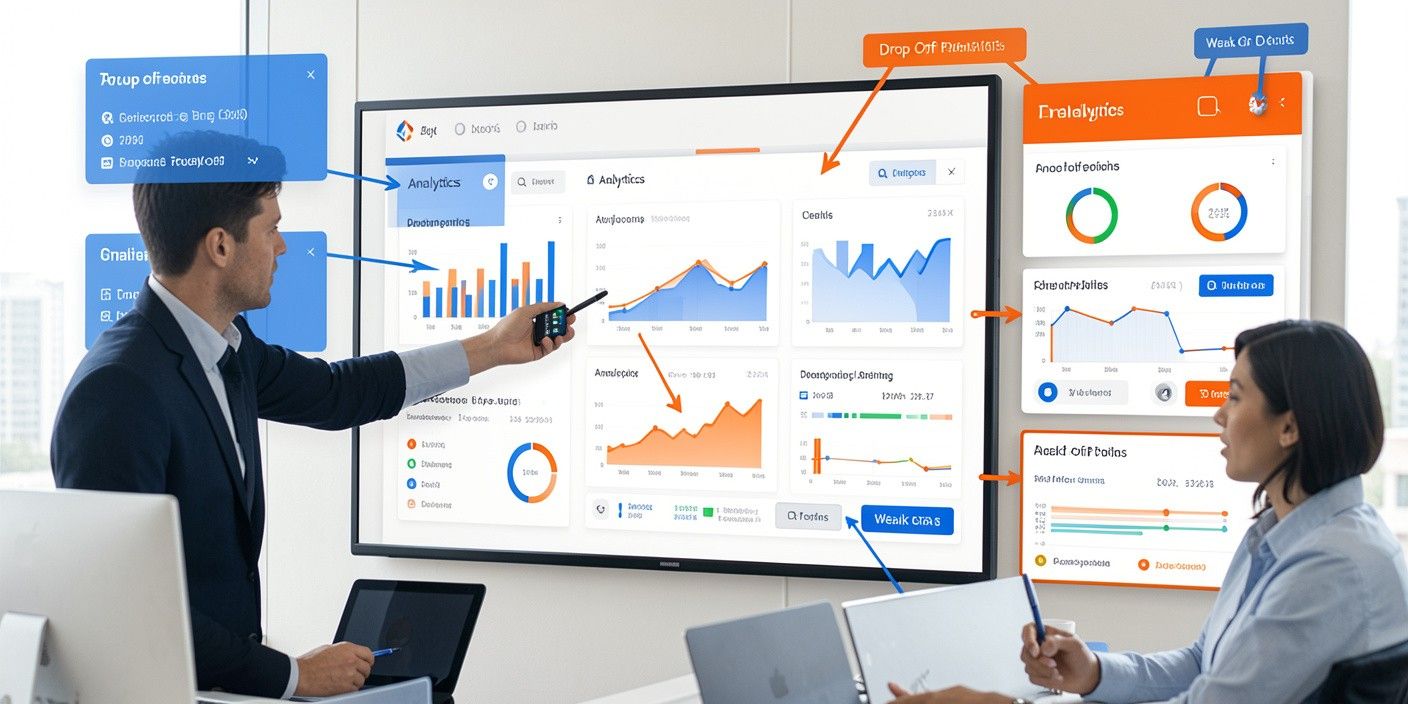
But the sales dashboard gave a very different view – no upside in numbers
Very few serious conversations were coming in. Most leads were cold, unqualified, or disappeared after the first interaction. Some months, the sales team would receive dozens of inquiries and still close almost nothing meaningful.
That’s usually the moment when confusion begins inside a company.
Marketing says the campaigns are working because traffic is increasing. Sales says the leads are useless because revenue is not moving.
Both sides feel right, and that’s exactly why the problem survives for so long.
More Traffic Does Not Automatically Mean More Business

A surprising number of businesses still believe traffic itself is a sign of growth.
But traffic only matters if it creates commercial movement. Otherwise, it is just attention passing through.
This is the hidden frustration behind the phrase website traffic but no sales. Businesses assume they have a sales problem when the real issue starts much earlier.
Sometimes, the wrong audience is being targeted altogether. In other cases, the audience is relevant, but the website fails to move them toward action.
The visitor lands. Scrolls. Reads a little. Leaves.
No inquiry. No call. No serious buying intent.
Over time, this creates a strange situation where marketing activity increases while revenue stays flat.
And eventually, leadership starts asking uncomfortable questions.
The Website Is Talking, But It Isn’t Saying Anything Useful
A lot of business websites look polished. That’s not the same thing as being effective.
Most websites today are filled with broad claims:
- “We deliver excellence.”
- “Customer-first approach.”
- “Innovative solutions.”
The problem is that none of this helps a buyer make a decision.
People visiting a website are looking for answers to very practical questions:
- What exactly does this company solve?
Is this relevant to my business? - Why should I trust them over someone else?
- What happens if I reach out?
When those answers are unclear, website traffic not converting becomes inevitable. The website creates visibility. But visibility without conviction is just noise with a logo.
The website creates visibility. But visibility without conviction is just noise with a logo.
And conviction is what drives action.
The Disconnect Between Marketing and Sales Is Usually Bigger Than What People Think
One of the most common growth issues inside companies is marketing and sales misalignment.
Marketing teams are rewarded for visibility. Sales teams are judged on revenue. Naturally, both teams start optimising for different outcomes.
Marketing celebrates traffic growth.
Sales questions lead quality.
Eventually, both sides start distrusting each other’s numbers.
This problem becomes dangerous because it creates the illusion that progress is happening somewhere in the system. Leadership sees traffic increasing and assumes the pipeline will eventually improve.
But traffic alone does not create business opportunities.
Intent does.
And if the website is not attracting the right intent or converting that intent properly, the gap between marketing activity and sales outcomes keeps growing.
Most Businesses Fail To Build An Effective Conversion Journey
This is where things usually get interesting.
Many companies invest heavily in getting visitors to the website, but almost no time is spent thinking about what the visitor experiences after arriving.
That entire middle layer is often weak.
The messaging is vague. The offer is unclear. The call-to-action feels generic. Sometimes the website speaks like a branding agency while the buyer is looking for commercial clarity.
This is why businesses struggle to convert website traffic into leads even after spending heavily on campaigns.
The problem is not always lead generation.
Sometimes the problem is that the website gives people no compelling reason to move forward.
And buyers today do not wait around trying to “figure out” what a business does. If the message is unclear, they leave within seconds.
Why Sales Funnel Optimisation Is Not Just About Technology
A lot of businesses treat sales funnel optimisation like a technical exercise.
They redesign landing pages. Add chatbots. Change forms. Improve automation sequences.
Those things can help, but they rarely fix the deeper issue if the positioning itself remains weak.
Strong conversion usually comes from clarity and relevance.
The buyer should immediately understand:
- Why this matters,
- Why this company is credible,
- Why they should act now instead of later.
When that clarity exists, conversion improves naturally.
When it doesn’t, businesses keep trying to fix structural problems with cosmetic changes.
That’s why many companies spend months trying to improve their website conversion rate without seeing meaningful improvement.
The issue was never the button placement.
It was the commercial message.
Why the Sales Team Ends Up Feeling Frustrated

When websites generate traffic but not buying intent, the sales team absorbs the damage.
They spend time calling weak leads. Following up endlessly. Chasing conversations that were never serious to begin with.
Eventually, the sales process slows down because energy gets wasted in the wrong places.
This is one of the hidden reasons businesses struggle to increase website leads that actually convert into revenue. The system is generating quantity instead of quality.
The Businesses That Solve This Think Differently
The companies that successfully convert website traffic into leads usually stop thinking about websites as marketing assets.
They start treating them like sales infrastructure.
Everything changes after that.
The messaging becomes sharper. The positioning becomes more specific. The website starts speaking to real business pain points instead of generic branding language.
Most importantly, the website begins qualifying buyers instead of simply attracting visitors.
That shift changes conversion quality dramatically.
Because the goal is not traffic.
The goal is commercial intent.
The MIH Perspective
At Make 10X Happen, we work with businesses that have invested significantly in their digital presence — and are still not seeing it translate into commercial momentum. In almost every case, the issue is not the traffic volume. It is the disconnect between what the website communicates and what the buyer actually needs to feel confident enough to act.
One client was spending Rs. 80,000 a month on campaigns. Eleven serious enquiries in six months. Two conversions. We identified the positioning gap in one session. Rewrote the homepage and CTA. Enquiry quality changed within thirty days — without a single additional rupee in ad spend. The traffic was always there. The conviction was not.
A strong growth system aligns positioning, traffic, sales conversations, and buyer intent into one connected journey.
Without that alignment, businesses keep generating attention while revenue stays unpredictable.
And eventually, traffic becomes a vanity metric instead of a growth engine.
A Question Worth Asking
If your website is bringing people in every single day,
Why does your sales team still feel like they are chasing business instead of receiving it?
If that question landed, it is worth thirty minutes of your time to find the answer.